
Screw Puzzle Strategy: Read the Board Before You Unscrew
Every screw you pull takes a free hole, and a bar waits for its last screw. How to count screws, budget the empty holes and set up chains of falling bars.
5 min read
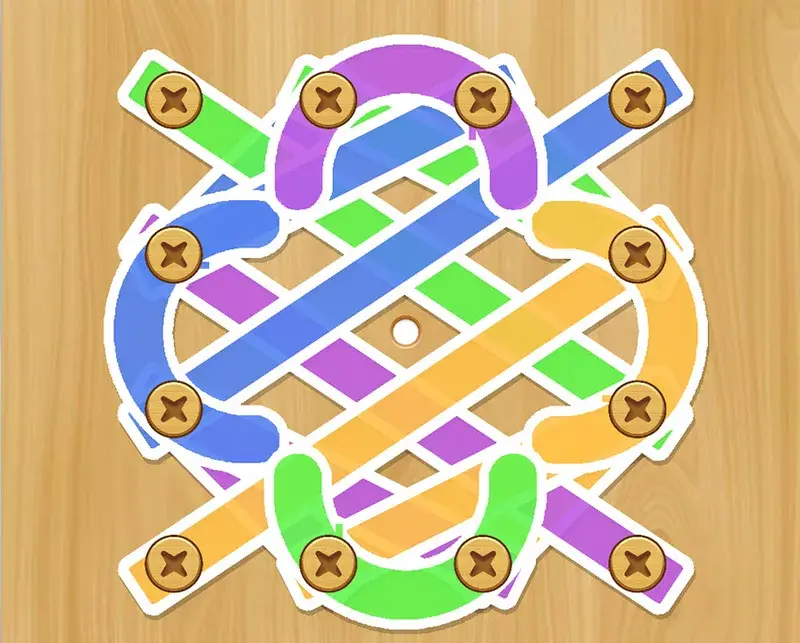
In Screw Puzzle: Nut & Bolt Sort you have exactly one move: take a screw out of the wooden board and put it into an empty hole. Bars are pinned down by those screws, and a bar falls off the board the moment nothing holds it any more. Clear every bar and the level is done.
That sounds simple, and the first twenty levels are. After that the board stops being a tapping game and becomes an ordering puzzle, because two things run out at once: screws, and places to put them.
The two resources you are managing
Start with the screws left on a bar. A bar with one screw is one move from falling. A bar with four screws needs four moves before it can go anywhere. When you are choosing what to work on, the bar with the fewest screws is almost always the cheapest.
The other resource is free holes, and this one decides most levels. Every screw you pull has to sit in a hole until its bar drops, and there are only a few empty holes on the board at any moment. Pull screws in a careless order and the holes fill with screws that are holding nothing, while the bars you actually need to move have nowhere to put theirs.
Most levels are lost by spending all the holes on screws that freed nothing.
Read the board before the first screw
Ten seconds of looking saves a restart. Answer three questions.
- Which bars have a single screw left? These are free progress: pulling that screw costs one hole and hands it straight back when the bar falls.
- What does each drop open up? A falling bar clears part of the board and frees the holes its screws were sitting in. The best first move is usually the one whose drop gives you the most room to work next.
- How many holes are free right now? Count them, every level. If your next move would fill the last free hole without dropping a bar, stop and look again.
Spend holes on drops, not on tidying
The instinct is to clear the screws nearest your thumb, or the ones that look loose, or a colour you happen to like. On this board, a screw that frees nothing is a hole borrowed at interest.
Before each tap, finish this sentence: "This bar drops, and then I can ___." If you cannot fill in the blank, put the screw back and work somewhere else.
Moves worth making, in rough order:
- the last screw on a bar with nothing on top of it
- a screw that lets a bar fall and uncovers the part of the board you need next
- a screw that sets up the last screw of another bar
- everything else, later, when there are holes to spare
Plan a chain, not a screw
Strong players line up runs rather than solving one screw at a time: bar A drops and returns two holes, those two holes take the last screws of bar B, bar B drops and pays for bar C. Once a chain like that is moving, the board solves itself for several moves.
Two habits make chains happen.
Work backwards. Pick the bar you most want off the board, then list what is holding it and what is lying on top of it. That list, read in reverse, is your plan.
Leave one hole in reserve. A single spare hole is what lets you fix a mistake, or park a screw while you wait for a bar to fall. The players who run out of moves almost always spent that last hole on something that did not drop anything.
Bars lie on top of each other
A bar sitting underneath another one may stay on the board even after you have pulled all of its own screws, because the bar above is still holding it down. That is where careful play pays: pulling screws from a bar buried in the middle of the pile can look productive while it buys you nothing, and each of those screws is occupying a hole.
Clear from the top of the pile downwards. If a bar is deep in the pattern, leave its screws where they are until the bars over it have gone.
When the board jams
If every hole is full and nothing is about to drop, slow down and scan the whole board, not just the part you were working on.
- Look for a last screw on any bar.
- Look at bars where you already pulled most of the screws; finishing one is usually cheaper than starting something new.
- Remember that the board changes when a bar falls. A screw that was unreachable a moment ago may be fine now.
If there is really nothing left, use a tool. The hammer knocks a screw out of the board, and you can open an extra hole when the free ones are used up. Spend them when a drop is ready to follow, not in the hope that one appears.
And restart early. A jammed board is not worth unpicking screw by screw; a fresh attempt planned properly in the first minute is faster.
Does colour matter?
Not for the rules. The colours label the bars so you can follow them as they cross and weave. You never sort screws by colour here; you place them in empty holes, and a bar drops when its last screw is out.
If the game you are playing asks you to drop screws into colour-matched boxes, that is a different family of puzzle (nut sort, Screw Jam), and the strategy there is sorting rather than ordering.
The short version
Count the free holes. Find the bars one screw from falling. Take those first, use what each drop gives you, and leave the bars buried in the pile alone until the board above them is clear. Order beats speed, every level.
The best way to learn it is to try it: Screw Puzzle: Nut & Bolt Sort has 3,000+ levels, is free to play, and gets denser as you go.